
How to Read a Casino Game’s Payout Percentage and What It Actually Tells You

A casino payout percentage is the share of all money wagered on a game that is returned to players over the long run. If a game is listed at 90%, the source figure says that for every $100 bet, ninety dollars is returned to the player. The other side of that coin is the house edge, which is the share the operator keeps. A house edge of one tenth means the casino keeps $10 for every $100 spent on the game. The number describes a long-term average for the game and says nothing about any single session.
What the Payout Percentage Actually Measures
The payout percentage, often called return to player or RTP, is a ratio between total stakes and total returns across a very large number of plays. It is calculated over the whole game and across every player. It does not describe a single session or a single spin.
That distinction matters because the figure describes the machine or the game. It does not describe your bankroll. A game with the same payout returns the stated share for every $100 wagered in aggregate. Your own result over an evening can be far above or far below that, and the percentage says nothing about which it will be.
The complement is the house edge. If the payout is ninety per cent, the edge is one tenth, or ten per cent. The two numbers always add up, so once you know one you know the other. Read them together and you get a clearer picture of what the game costs over time.
The figure also depends on how the game is played. Skill-based games can have different payouts depending on strategy, and table games with optional side bets often carry a much worse payout on those bets than on the base game. The headline number usually refers to the base game played with standard rules.
Why the Number Is a Long-Run Average, Not a Session Forecast
The most common misreading is to treat the payout percentage as a per-session expectation. It is not. The figure is built from totals accumulated over an enormous number of plays, and short sessions are dominated by variance.
This is the point that regulators have wrestled with. In 2018, Australia’s Federal Court ruled that return-to-player information is misleading because it reflects long-term rather than short-term play. The court’s reasoning is the clearest public statement of the gap between the statistic and what a player experiences.
The same gap explains why two players on identical machines can have completely different evenings. One might be well ahead after a short session, the other well behind, and both results are consistent with the same long-run percentage. The number constrains the average and leaves individual results open.
Think of it like a coin that returns slightly less than it takes. Over a handful of flips you might win. Over a million flips the small edge shows up. The payout percentage is the million-flip view, and your session is the handful.
Reading the Figure on a Specific Game
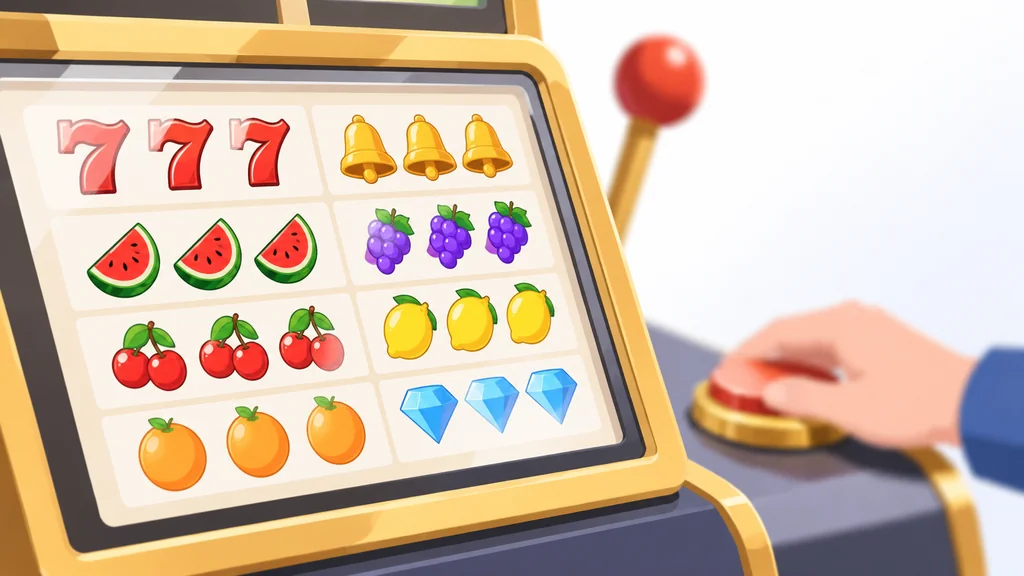
When you look at a game’s information screen, the payout figure is usually presented as a percentage, sometimes with the house edge beside it. Here is how to work through it in practice.
- Find the stated return-to-player percentage on the game’s info or help screen.
- Subtract it from 100 to get the house edge for the base game.
- Check whether the figure covers the base game only or includes side bets and feature bets.
- Compare the figure with the same game type elsewhere, using the same rules.
- Note that the figure is an average across all players and gives you no session target.
- Check the game’s rules for any variation that changes the payout, such as different paytable settings.
Step three is where many readers trip. A game can advertise a healthy base-game return while its side bets carry a much steeper edge. If you plan to use those bets, the headline figure leaves them out.
Step six matters for machines that can be configured at different paytable levels. The same cabinet model can run different settings in different venues, so the number on the glass may differ from the setting the machine is running. Check the label or the venue’s published information.
What the Payout Percentage Does Not Tell You
The figure says nothing about volatility, which is how wildly results swing around the average. Two games can share the same payout percentage and feel completely different. One might pay small amounts often, the other rare large amounts.
It also says nothing about your chances of a winning session. A high payout percentage does not mean you will win tonight, and a lower one does not rule out a win. The number describes the long-run cost of play, and that is all.
The figure is also not a quality rating. A game with a lower payout can be more entertaining to you than one with a higher payout, and the percentage cannot speak to that. Treat it as one input among several, alongside the rules, the stakes, and how the game actually plays.
Finally, the figure does not account for how long you play. A game with a good payout percentage played for hours can cost more than a game with a worse percentage played briefly. The percentage is a rate, and the total cost is the rate multiplied by the amount you wager.
Why Players Misread It, and What Regulators Found
Misreading is not a niche problem. A 2014 UK Gambling Commission study found that many non-industry users do not understand return-to-player mechanics. The finding is old, but the confusion it describes is easy to reproduce: the figure looks like a per-session promise and reads like one to anyone who has not been shown otherwise.
The confusion has a structural cause. The number is precise, published, and easy to compare, which makes it feel like a forecast. It is a long-run average, so it behaves differently from a forecast. The precision invites the wrong reading.
The 2018 Australian ruling pushed the point further, holding that presenting the figure without that context can mislead. Whatever your local rules require, the lesson for a reader is the same. Read the number as a description of the game’s economics over time, and keep your own session expectations separate from it.

How the Figure Varies by Game Type and Jurisdiction
Payout percentages are not uniform across games, and they are not uniform across venues. Slots tend to sit in a range that varies by market and by machine setting. Table games often carry different figures because the rules and the bets differ.
Jurisdiction can affect minimum payout requirements. All slot machines at Crown Perth in Australia must have a minimum ninety per cent return-to-player percentage, and the same venue’s electronic gaming machines are described as having the same return rate. Those are local requirements with no global equivalent.
The commercial weight of slots explains why the figure gets so much attention. Slot machines contribute about 70% of the average U.S. casino’s income. Where a product drives that much revenue, the payout setting is a business decision as much as a player-facing one.
For online games, the figure is usually published on the game’s information page, and certification processes check that the published figure matches the game’s actual behaviour. The certification angle is covered in this site’s guide to how random number generators are certified for online casinos, which explains the testing process and says nothing about any particular game’s return.
Comparing Games Without Being Misled
Comparison is where the payout percentage is most useful, provided you compare like with like. A few habits keep the comparison honest.
Compare the same game type with the same rules. A slot compared with a table game tells you almost nothing, because the two products work differently. Compare slots with slots, and table games with table games played under the same rule set.
Compare the base game and check what the headline covers. If one game’s figure includes feature bets and another’s does not, the comparison is skewed. Check what the number covers before you rank the games.
Compare over the same stake pattern. A game you play at higher stakes costs more per hour at the same payout percentage, because the rate applies to the amount wagered. The percentage is not a cost in itself.
Where you play matters too. The device and connection you use affect the experience around the game, and this site’s comparison of mobile app versus browser play covers the fee and lag side of that choice. The payout figure does not change with the device, but the cost of playing does.
When to Ask the Venue or Check the Label
If the figure is not published where you can see it, ask. Ask the venue where the information is available. If the answer is vague, treat the game as one whose payout you cannot verify.
Check the label on the machine or the game’s information screen for the specific setting. The same cabinet model can run different paytable settings, and the venue’s published range may not match the machine in front of you.
For online play, look for the game’s help or info section and the certification statement. A published figure without a certification statement is a claim, and a certified figure is a checked one. The difference matters when you are comparing games across operators.
If you are choosing between platforms, the payout percentage is one factor among several. This site’s weighted checklist of top mobile gambling apps in 2026 sets out the criteria that can and cannot be settled from the outside, which is a useful frame for judging any published figure.
Casino Payout Percentage FAQ
Does a ninety per cent payout percentage mean I get ninety dollars back from every $100 I bet?
A ninety per cent payout percentage means that across all play on the game, ninety dollars is returned for every $100 wagered in aggregate. Your own session can return more or less, and the figure says nothing about which.
Is a higher payout percentage always better for me?
It is better in the long-run sense, because the house edge is smaller. It does not guarantee a better session, and it does not tell you anything about volatility or how the game feels to play.
Why do two games with the same payout percentage feel so different?
The percentage describes the average and leaves out the shape of the results. Volatility, bet sizing and paytable structure all change how a game plays, and none of them are captured by the payout figure alone.
Can the payout percentage change on the same machine?
The payout percentage can change where the machine supports different paytable settings. The same cabinet model can run different configurations in different venues, so check the label or the venue’s published information instead of assuming the figure is fixed.